Why Your Employee Handbook Is Outdated the Day You Publish It
Most companies treat their employee handbook as a finished product.
It gets written, reviewed by a lawyer, distributed to new hires, and then filed away until someone remembers to update it, often years later. That approach assumes the law stays the same while the handbook sits on a shelf. I can assure you, it does not.
The Law Changes Faster Than Most Handbooks Do
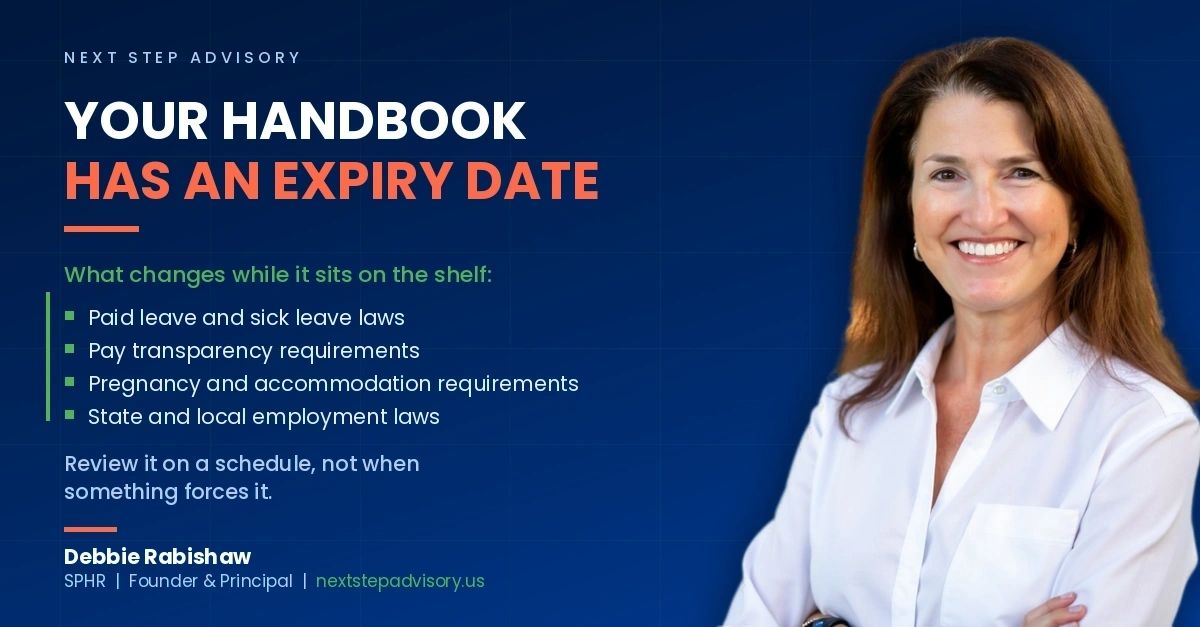
State and local employment law shifts constantly. Paid leave requirements, pay transparency rules, harassment training mandates, and remote work provisions get updated at a pace that outstrips most companies’ review cycles.
A handbook written to be compliant on the day it was published can be out of step with the law within months, particularly for companies operating across multiple states.
The Multi-State Trap
Remote work has made this problem worse. An employee who relocates, or a new hire brought on from another state, can quietly expose a company to requirements its handbook never accounted for.
A single national handbook rarely holds up under that kind of variation. What applies in one state may directly conflict with a requirement in another, and a document built for a single location cannot flex to cover both.
Policies Written Once Become Liabilities Later
A handbook that was accurate at launch does not stay protective on its own.
Outdated leave policies, unclear disciplinary language, or missing acknowledgments of new legal requirements can turn a document meant to reduce risk into evidence that a company failed to keep pace with its obligations. In a dispute, an outdated handbook can work against the very organization it was written to protect.
Building a Review Cycle That Actually Works
The fix is not writing a better handbook once. It is building a recurring handbook review process.
That means assigning ownership of the handbook to someone accountable for tracking necessary changes, scheduling a review at least annually, and treating multi-state expansion or new hiring locations as a trigger for immediate reassessment rather than something to catch up on later.
A handbook should be treated the way an organization treats its financials: reviewed on a schedule, not left until something forces the issue.
The Real Purpose of a Handbook
A handbook exists to set expectations and reduce risk, not to check a box during onboarding.
Companies that revisit their handbook regularly are the ones who catch small compliance gaps before they become expensive ones. The organizations that get caught off guard are almost always the ones that assumed the document they wrote years ago was still doing its job.
About Next Step Advisory
Next Step Advisory provides tailored HR solutions for small and mid-size businesses, from hourly consulting and defined projects to a full-service HR department by monthly subscription. Founder Debbie Rabishaw brings more than 35 years of HR leadership, practical judgment, and a genuine commitment to people and business.
To discuss how you can transform your HR challenges into strategic advantages, contact us today.