Why “Culture Fit” Is Quietly Killing Your Diversity Goals
Culture fit sounds like a reasonable hiring standard.
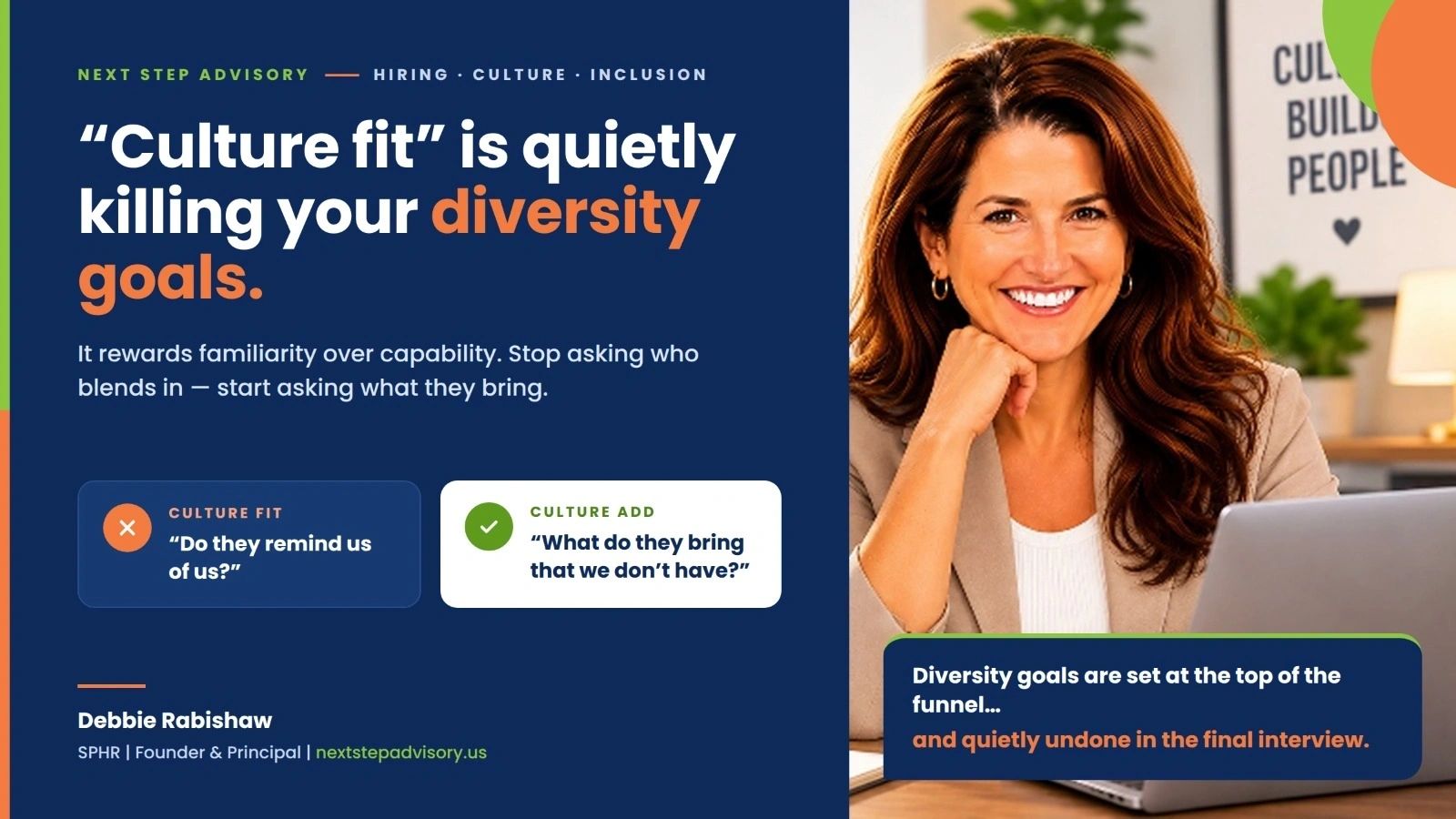
Companies want people who work well with the team, align with existing values, and blend into how things already get done. The problem is that culture fit, as most organizations actually apply it, tends to reward familiarity over capability.
What Culture Fit Actually Measures
In practice, culture fit often becomes a proxy for comfort. Interviewers gravitate toward candidates who remind them of people already on the team, who share similar backgrounds, or who communicate in familiar ways.
That instinct feels like good judgment at the moment, but it quietly narrows the pool of people who get hired, promoted, and trusted with bigger opportunities.
The Goals This Undermines
Organizations can invest heavily in recruiting, revised job postings, and expanded sourcing to find a diverse candidate pool, and still see little change in outcomes if culture fit remains the deciding factor in final interviews.
A hiring process can look inclusive on paper while still filtering out anyone who does not match the existing team’s unspoken norms. The diversity goals get set at the top of the funnel and quietly undone at the bottom.
“Culture-Add” as a Better Standard
The alternative is not lowering the bar. It is changing what the bar measures and how you name it.
Thinking about the concept as a culture-add prompts the question: what does a candidate bring that the team does not already have, rather than how closely they resemble the people already there. That shift moves the evaluation toward specific behaviors and values, like how someone handles disagreement or approaches problem solving, instead of vague impressions of fit.
What This Looks Like in Practice
Making this change operational means rewriting interview guides to focus on observable behaviors rather than gut reactions.
Interviewers should be asked to articulate specifically what a candidate demonstrated, not simply whether they liked them. Structured interview questions and consistent evaluation criteria across candidates help remove the subjective judgment that culture fit usually depends on.
The Leadership Responsibility Here
This change does not happen because a job posting says the company values diversity. It happens when leaders hold hiring managers accountable for how they evaluate candidates, not just who ultimately gets hired.
Organizations serious about building their culture need to look past their stated intentions and examine the actual criteria being used in every interview room. That is where the real decisions get made.
About Next Step Advisory
Next Step Advisory provides tailored HR solutions for small and mid-size businesses, from hourly consulting and defined projects to a full-service HR department by monthly subscription. Founder Debbie Rabishaw brings more than 35 years of HR leadership, practical judgment, and a genuine commitment to people and business.
To discuss how you can transform your HR challenges into strategic advantages, contact us today.