
What Your Turnover Data Isn’t Telling You
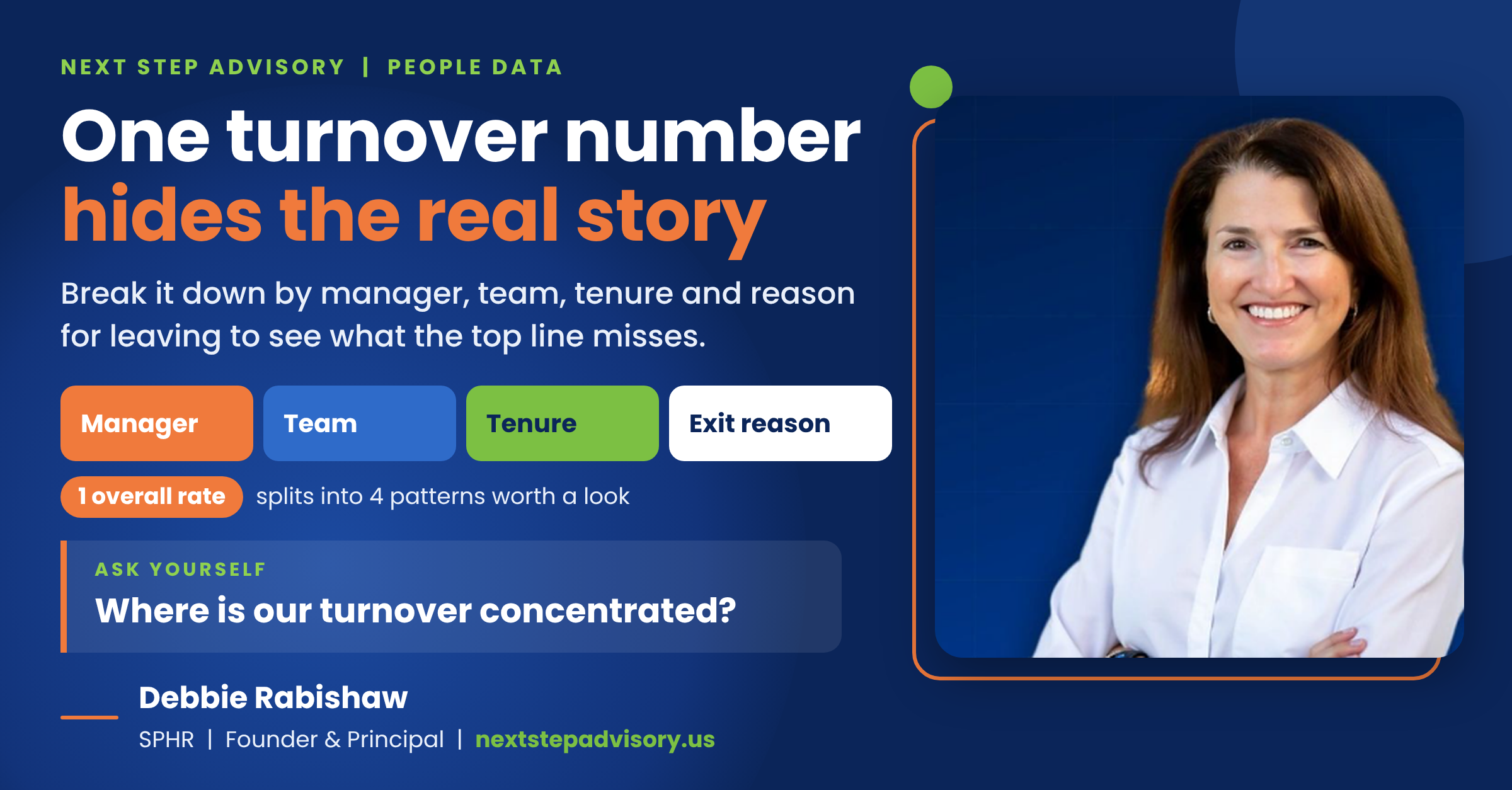
Most companies track turnover as a single number.
They know their overall attrition rate, they compare it to industry benchmarks, and they report it to leadership on a quarterly basis. That top line number rarely tells the whole story, and in many cases it hides the exact patterns leaders need to see.
The Problem with Aggregate Numbers
A turnover rate that looks healthy overall can mask a serious problem in one department, one manager’s team, or one tenure group.
If one team is losing people at three times the company average while everyone else stays steady, the aggregate number may still look reasonable. Leaders looking only at the top line miss the specific signal buried inside it.
Where the Real Patterns Live
Turnover data becomes useful when it is segmented by manager, department, tenure, and reason for leaving.
A spike in departures around the six month mark often points to onboarding or early expectation-setting problems. Turnover concentrated under one manager, even when performance reviews look fine, often points to a leadership issue that has not surfaced through other channels. These patterns only become visible when the data is broken apart rather than viewed as one number.
Exit Reasons Deserve More Scrutiny
Most exit interviews capture a stated reason for leaving, but stated reasons and actual reasons do not always match.
Employees frequently cite compensation or a new opportunity because it is easier than describing frustration with a manager, concerns about the culture, or the absence of a meaningful growth path. Even when employees are more candid, leaders may discount the feedback because they view the departing employee as negative, difficult, disengaged, or simply not a good fit.
But how often do those labels become a convenient reason to dismiss information we do not want to hear?
Leaders who take exit reasons at face value, or discredit the messenger without examining the message, may miss the underlying story. The real value comes from looking for corroborating patterns across departing employees, engagement feedback, performance concerns, turnover data, and what current employees may be reluctant to say directly.
Connecting Turnover to Manager Quality
One of the most useful exercises a company can run is comparing turnover rates across managers with similar team sizes and functions.
When one manager consistently sees higher turnover than peers in comparable roles, that pattern is worth investigating directly, regardless of how that manager is perceived elsewhere in the organization.
Turning Data into a Retention Strategy
Turnover data only creates value when someone is asking why, not just tracking how much.
Organizations that dig into the specific patterns behind their numbers, rather than reporting a single rate each quarter, are the ones who catch retention problems while they are still solvable.
About Next Step Advisory
Next Step Advisory provides tailored HR solutions for small and mid-size businesses, from hourly consulting and defined projects to a full-service HR department by monthly subscription. Founder Debbie Rabishaw brings more than 35 years of HR leadership, practical judgment, and a genuine commitment to people and business.
To discuss how you can transform your HR challenges into strategic advantages, contact us today.