Multiple Industries, Same Issues
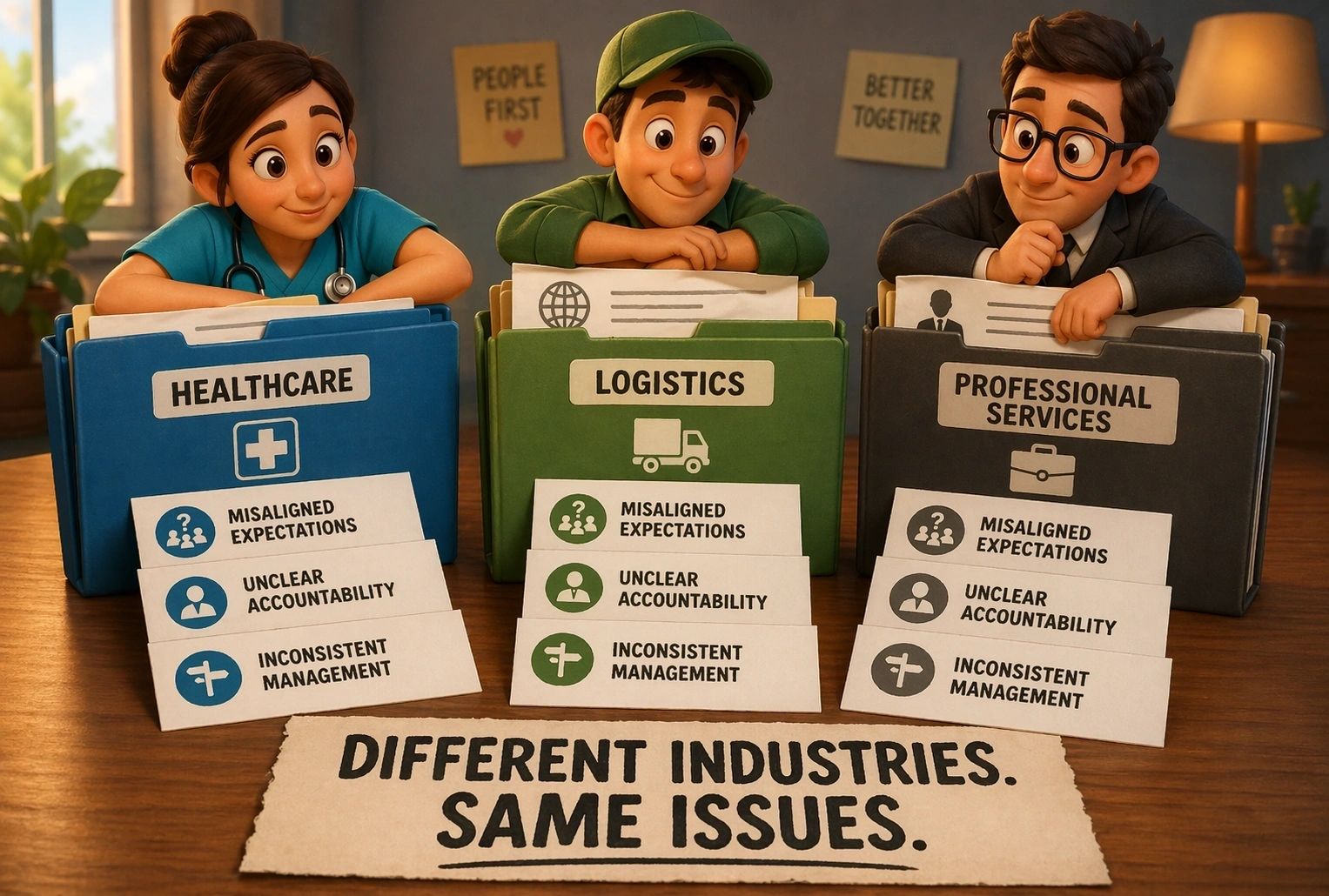
Spend enough time across different industries and a pattern starts to emerge.
Healthcare, professional services, and logistics appear to operate in entirely different worlds, shaped by distinct regulations, pace, and day-to-day demands.
Yet the people challenges inside those environments can look remarkably similar once you step back and examine them more closely.
Misaligned Expectations
Misaligned expectations surface first, usually in subtle ways that build gradually rather than all at once.
Leaders assume roles are understood while employees operate with a different interpretation of what success looks like, which leads to missed handoffs, duplicated efforts, and a level of frustration that mounts with each interaction instead of resolving itself.
Unclear Accountability
Unclear accountability follows closely behind, creating drag across the organization.
When ownership is not explicitly defined, work slows, decisions stall, and teams begin looking sideways to determine who should move something forward. This is also where performance issues start to surface.
Whether it impacts patient flow in healthcare, delivery timelines in logistics, or client experience in professional services, the outward effect may differ, but the underlying issue remains the same.
Inconsistent Management
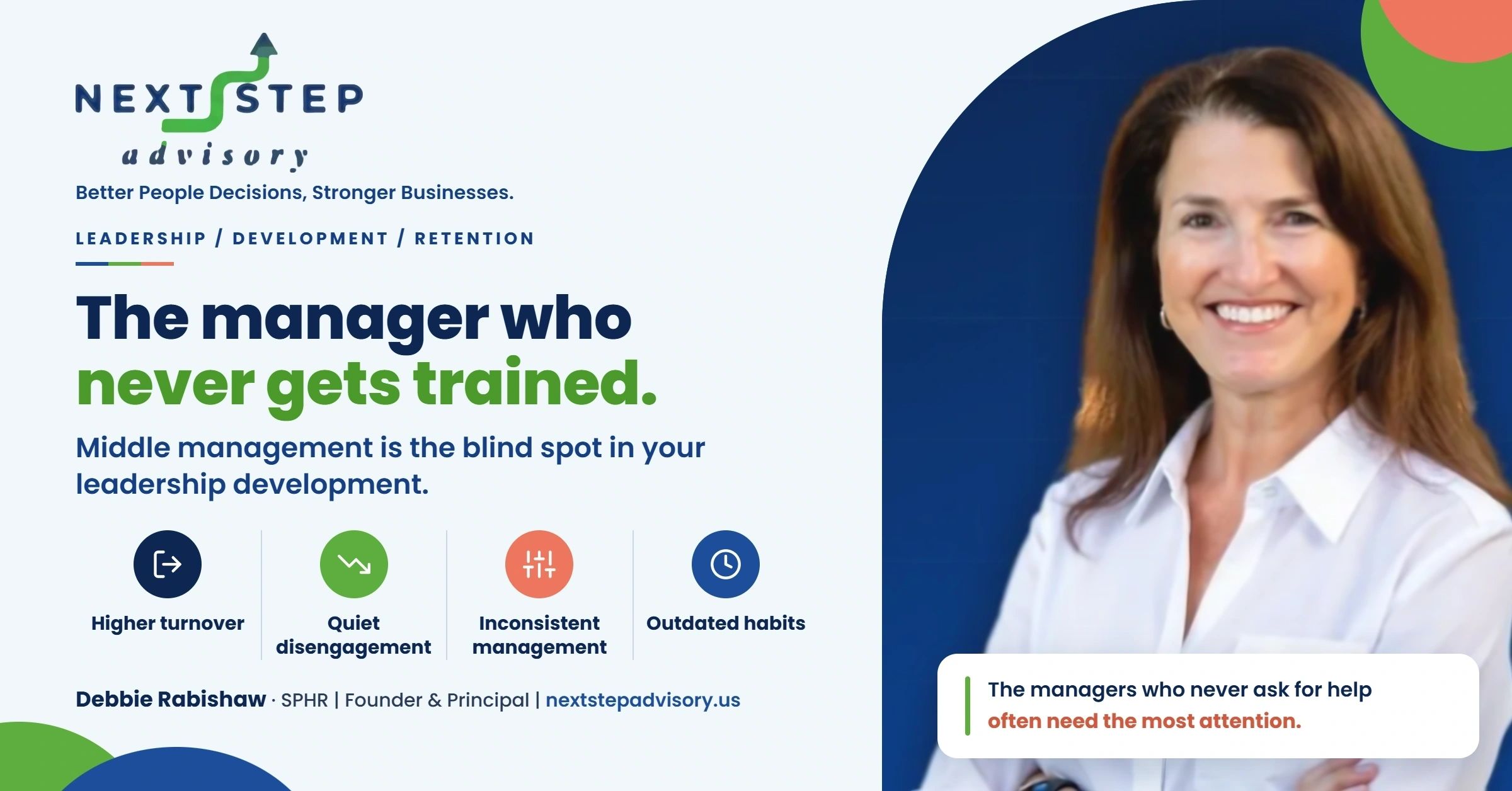
Inconsistent management adds another layer of complexity that is harder to correct once it takes hold.
One leader sets a high bar and follows through, another changes direction midstream, and a third avoids difficult conversations altogether. This forces employees to adapt to individual preferences rather than operate within a shared standard, ultimately leading to confusion and disengagement.
Not Industry-Specific Problems
These challenges are not tied to a specific industry.
There is a tendency to treat each sector as if it requires an entirely unique approach to people and operations, which can lead organizations to overcomplicate solutions or dismiss ideas that have already proven effective elsewhere simply because they originated in a different environment.
The Fundamentals Transfer
In practice, the fundamentals translate across industries more easily than most expect.
Clear role definition removes unnecessary confusion regardless of context, defined accountability creates momentum, and steady management expectations give teams something stable to rely on, even as the work itself continues to evolve.
What Effective Organizations Do Differently
Organizations that make progress in these areas approach them with intention rather than assumption.
They reinforce alignment reliably instead of assuming it exists. Additionally, they define accountability and revisit it as the business evolves, and they establish shared management expectations so that leaders are supported in creating consistency rather than left to interpret standards on their own.
A More Useful Question
After working across multiple sectors, the takeaway becomes difficult to ignore.
The language may change and the stakes may vary, but the underlying issues rarely do, which leads to a more useful question for leadership teams to consider: Are you dealing with something truly unique, or are you seeing a familiar problem through a different lens?
About Next Step Advisory
Next Step Advisory provides tailored HR solutions for small and mid-size businesses, from hourly consulting and defined projects to a full-service HR department by monthly subscription. Founder Debbie Rabishaw brings more than 35 years of HR leadership, practical judgment, and a genuine commitment to people and business.
To discuss how you can transform your HR challenges into strategic advantages, contact us today.