What You Need to Consider Before Promoting Your Best Performers
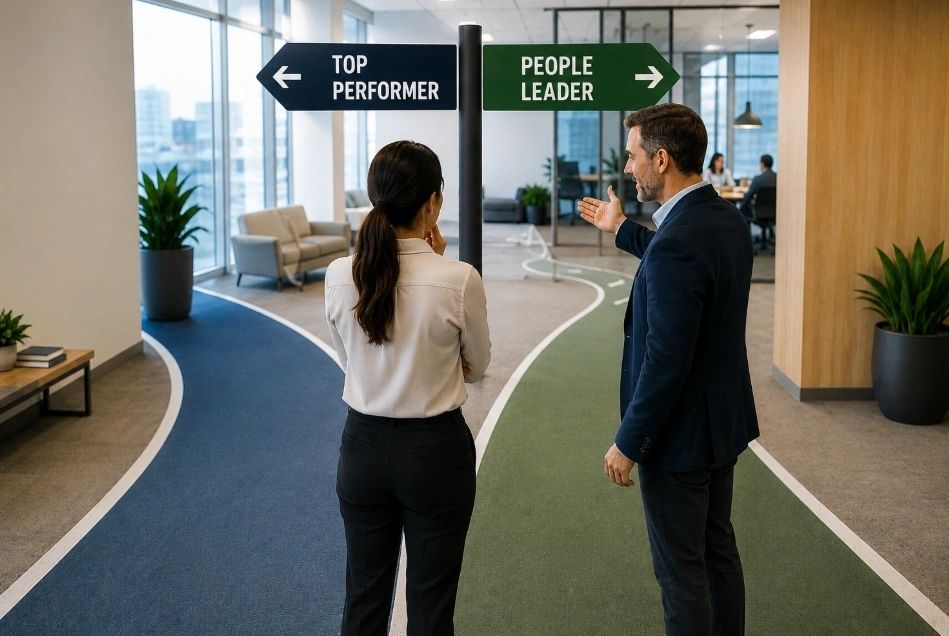
Strong performers seem like the obvious choice for a promotion.
They know the job, consistently deliver results, and have earned the respect of their peers. Yet many organizations discover that excelling as an individual contributor doesn’t automatically translate into success as a manager.
When a top performer struggles after a promotion, it’s easy to assume they weren’t cut out for leadership. The issue generally isn’t the individual, but a promotion process that focused on performance while overlooking readiness for people leadership.
Before promoting your best performers into management roles, here are five important considerations.
1. Do They Actually Want to Manage People?
Many organizations presume that career advancement naturally means moving into management.
Before making that assumption, ask the employee what they want.
Do they enjoy mentoring others? Are they interested in coaching and developing team members? Do they see leadership as part of their long-term career goals?
Sometimes a company has a management vacancy and sees a high performer as the easiest solution. The problem is that what the organization needs and what the employee wants may not be the same thing.
A conversation about career aspirations should happen before a promotion decision is made, not after.
2. Performance and People Skills Are Different Things
One of the most common promotion mistakes is assuming that someone who performs the work exceptionally well will automatically be able to manage others who perform that work.
Those are two very different skill sets.
Managing people requires giving feedback, holding others accountable, handling conflict, facilitating difficult conversations, and helping team members grow. None of those skills are guaranteed simply because someone is highly productive in their current role.
A great salesperson doesn’t automatically become a great sales manager. A talented technician doesn’t automatically become an effective team leader.
Leadership requires its own set of capabilities.
3. Preparing New Managers Is Your Responsibility
Management skills are learned.
Too often, organizations promote someone into leadership and expect them to figure it out as they go. Then they become frustrated when the new manager struggles.
New leaders need support, guidance, and practical tools.
That may include:
- Shadowing experienced managers
- Participating in leadership training
- Receiving scripts or frameworks for feedback conversations
- Regular coaching sessions with senior leaders
- Mentorship during the first several months
Promoting someone is only the beginning. Organizations play a significant role in helping new managers build competence.
4. Consider Why You Are Really Promoting Them
This can be an uncomfortable question, but it’s worth asking.
Are you promoting someone because they’re truly ready or because you’re trying to solve an operational challenge?
Sometimes leaders are stretched thin and need help managing the workload. There is pressure to fill a management position quickly, and promoting a top performer feels like the simplest answer.
If a promotion ultimately proves to be premature, leadership should be willing to acknowledge its role in that outcome.
The decision to promote belongs to the organization, and the responsibility to prepare that individual belongs there as well.
5. Promote with Intention, Not by Default
A promotion into management should be viewed as an investment in future leadership, not simply a reward for strong performance.
The most successful organizations take the time to evaluate interest, assess leadership potential, and provide meaningful support before and after the promotion occurs.
If you’re currently considering a promotion for one of your top performers, take a step back and look beyond their results. The questions you ask today may determine whether that employee becomes a successful leader tomorrow.
About Next Step Advisory
Next Step Advisory provides tailored HR solutions for small and mid-size businesses, from hourly consulting and defined projects to a full-service HR department by monthly subscription. Founder Debbie Rabishaw brings more than 35 years of HR leadership, practical judgment, and a genuine commitment to people and business.
To discuss how you can transform your HR challenges into strategic advantages, contact us today.