An Exit Interview Is Too Late: Redesign Your Stay Interview
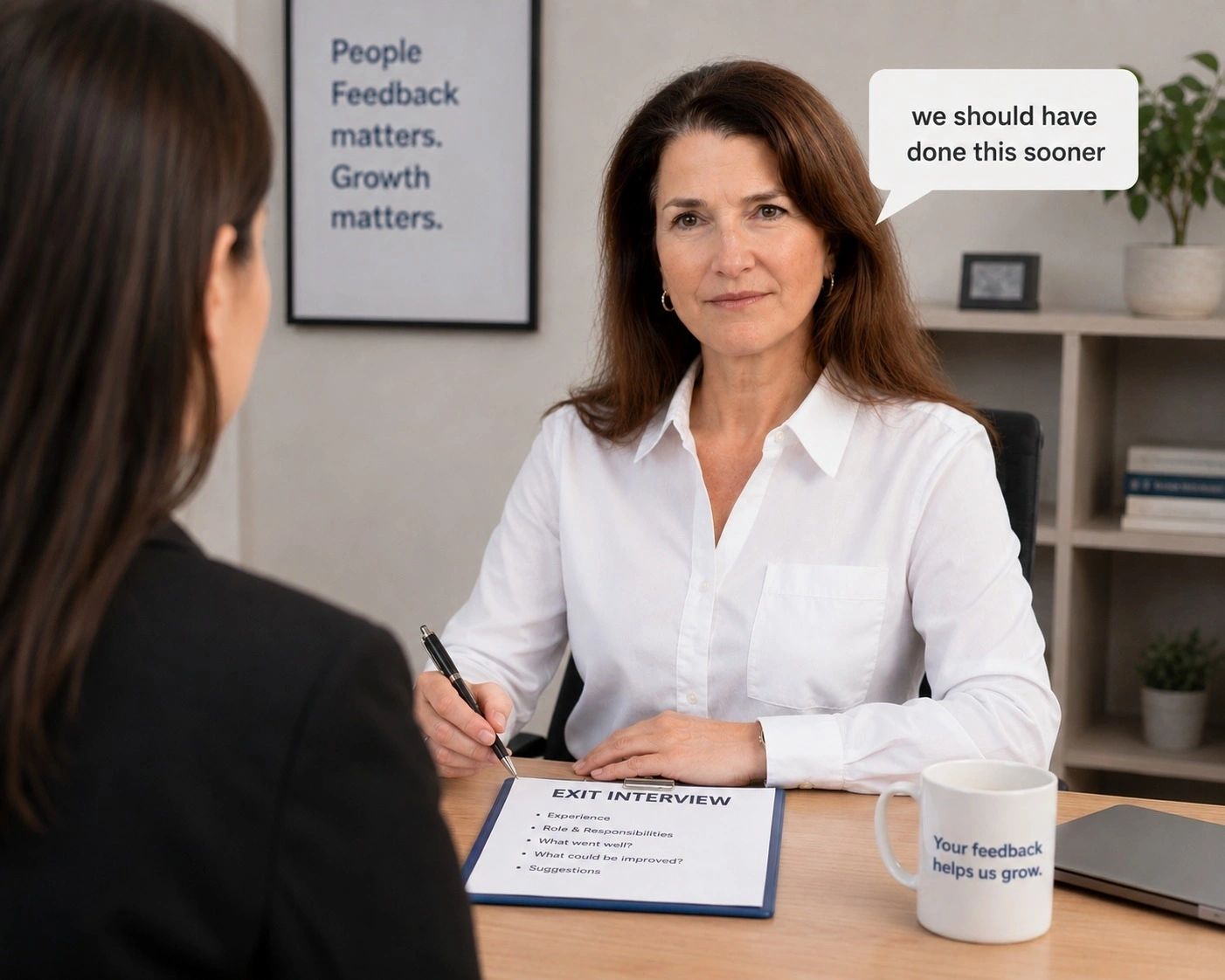
By the time an employee sits down for an exit interview, their decision has already been made.
Whatever they share in that conversation, however honest or detailed, arrives after the outcome it could have changed. Leaders often treat exit interviews as their primary window into what is going wrong inside the organization, but that window opens at the exact moment it stops being useful.
The stay interview solves a different problem entirely.
The Exit Interview Tells You What Already Happened
Exit interviews are backward looking by design. The employee has already accepted another offer, already mentally left the role, and already decided that whatever issues existed were not worth staying to fix.
Feedback collected at this stage can still be valuable for identifying patterns across departments or tenure windows, but it cannot save the relationship that just ended. Leaders who rely solely on exit interviews are always managing HR one departure behind.
Why Stay Interviews May be a Better Option
A stay interview happens while someone is still engaged, still contributing, and still deciding whether this is the right place to build a career.
That timing changes everything. Instead of asking what went wrong, leaders get to ask what is working, what is missing, and what would make the next year better than the last. The employee is not defending a decision to leave. They are shaping what happens next.
This shift from reactive to proactive is where retention actually gets built.
What to Actually Ask
A stay interview is not a performance review and it is not a casual check-in disguised as one.
Useful questions include what keeps them working with you: what part of their role energizes them most, what would make them consider looking elsewhere on a hard day, and what would need to change for them to see themselves still with you in two years. Specific, direct questions surface specific, direct answers.
Vague check-ins produce vague reassurances. Neither leaders nor employees benefit from a conversation that stays on the surface.
Timing Matters More Than the Questions
Stay interviews lose their value if they only happen once a year during a formal review cycle.
The strongest organizations build them into the rhythm of leadership, particularly around milestones like the six month mark, a completed project, or a promotion cycle where someone might reasonably start evaluating their next move. Waiting for a scheduled review to ask these questions means missing the moments when the answers matter most.
Turning Insight into Action Before It’s Too Late
Collecting the information is only half the work. And not only is it only half the work, it’s the easy half. I know - big bummer, right?!
If an employee shares a concern in a stay interview and nothing changes, the conversation itself becomes the reason they may eventually leave. Leaders need a plan for acting on what they hear, even when the fix is not immediate. Acknowledging the concern and outlining a real next step matters more than solving everything on the spot.
Organizations that treat retention as an ongoing conversation rather than an annual exercise are the ones that stop being surprised by their own turnover.
About Next Step Advisory
Next Step Advisory provides tailored HR solutions for small and mid-size businesses, from hourly consulting and defined projects to a full-service HR department by monthly subscription. Founder Debbie Rabishaw brings more than 35 years of HR leadership, practical judgment, and a genuine commitment to people and business.
To discuss how you can transform your HR challenges into strategic advantages, contact us today.